
SMP Before & After a Hair Transplant.
Scalp micropigmentation can complement hair transplant results by creating the appearance of additional density, reducing visible scalp and helping camouflage FUE or FUT donor scars.
Whether you are considering a future hair transplant or already had one and want to improve the visual result, SMP can be designed around your real hair, transplanted follicles and existing hairline.
When a Hair Transplant Leaves Visible Scalp.
A hair transplant moves a limited supply of real follicles from the donor area into areas affected by hair loss. Even when transplanted hairs grow successfully, the finished result may still show more scalp than the patient expected.
The crown can be particularly demanding because achieving strong coverage across a larger thinning area may require a significant number of grafts. Because donor hair is limited, surgical density may not always create the visual coverage a patient originally imagined.
Scalp micropigmentation can help visually fill those spaces. SMP impressions are placed beneath and between existing and transplanted hairs, reducing the contrast between the scalp and the hair above it.
The before-and-after SMP result shown here demonstrates that visual difference. SMP did not create new follicles. It reduced the amount of visible scalp and helped the existing transplant appear fuller.
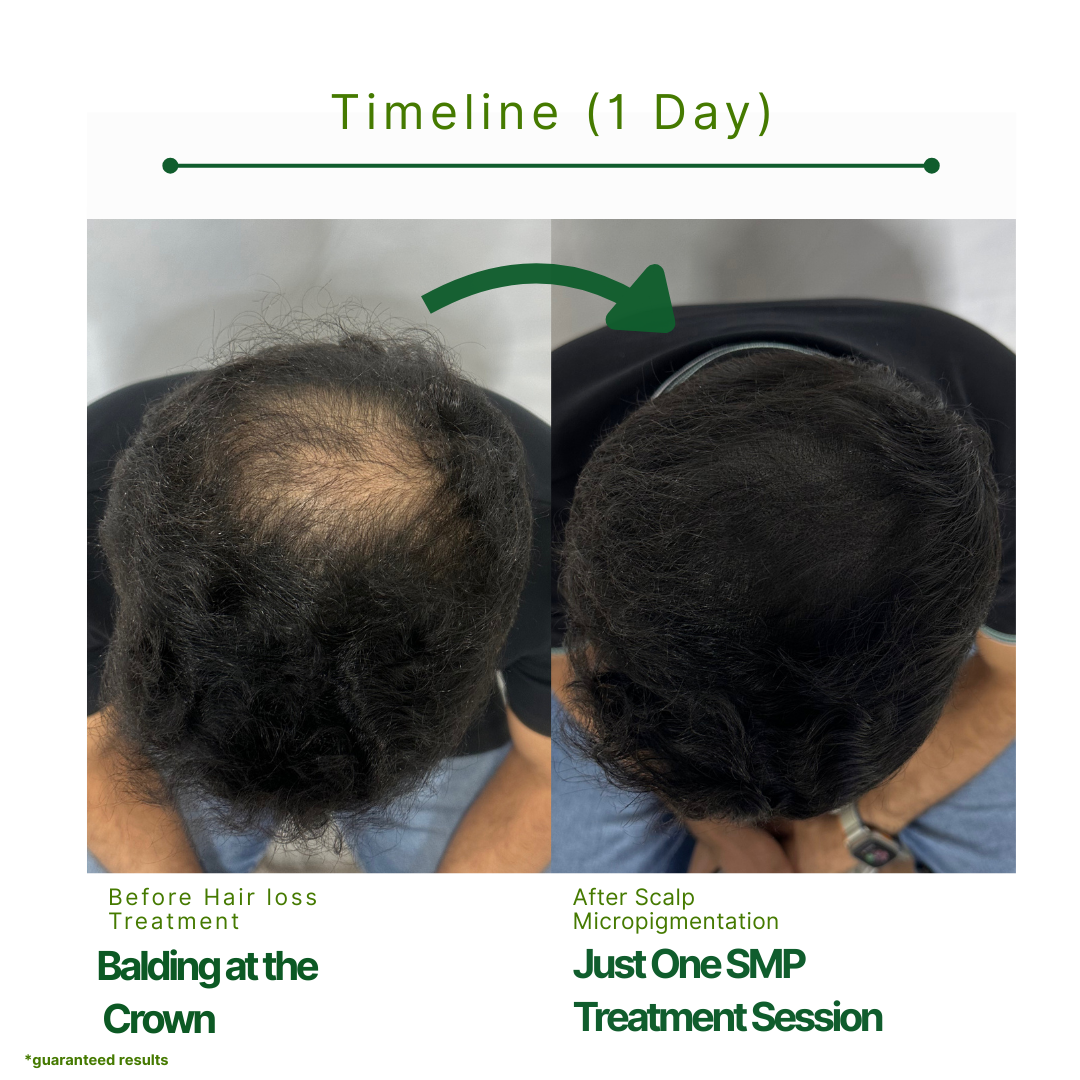
This real before-and-after result shows how SMP reduces visible scalp around existing and transplanted hair to create the appearance of greater density.
Two Treatments. Two Different Jobs.
A hair transplant physically moves real follicles. SMP changes the visual appearance of the scalp. For appropriate candidates, the two can work together.
Improve Visual Density
SMP reduces visible scalp between transplanted and existing hairs, helping the overall result appear visually fuller.
Work With Limited Donor Hair
Donor follicles are limited. SMP may provide another cosmetic option for improving visual density without immediately pursuing another surgery solely for additional coverage.
Camouflage Transplant Scars
SMP can also reduce the appearance of FUE extraction marks and FUT linear donor scars left after transplant surgery.
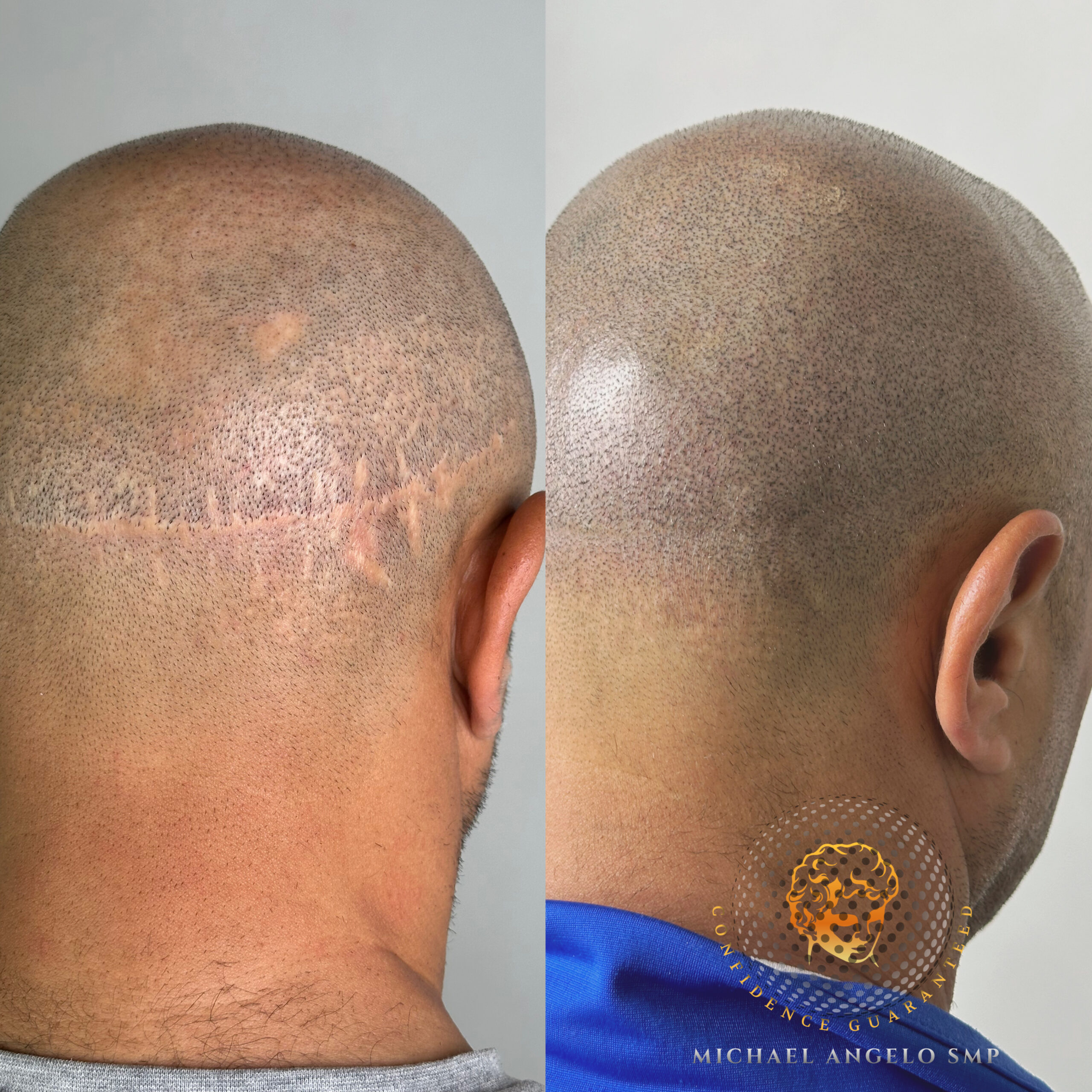
This real before-and-after result shows SMP used to reduce the visual contrast of a hair transplant scar and blend it with the surrounding area.
SMP for FUE & FUT Transplant Scars.
Hair transplant surgery can leave visible donor-area scarring. Scalp micropigmentation can camouflage mature transplant scars by placing carefully selected pigment impressions through and around the scar so that it visually blends with surrounding scalp and hair.
Scar camouflage is more technically demanding than standard SMP on untreated scalp. Scar tissue can accept and retain pigment differently from normal skin.
Scars can also become red quickly while they are being worked on. That temporary redness can make it harder to judge pigment contrast during the appointment.
For that reason, scar SMP should be approached conservatively. Pigment color, depth, spacing and layering all matter. Applying too much pigment or building too much density at once can cause the treated scar to stand out rather than blend naturally.
Michael Angelo SMP has worked with many types of scalp scars, including hair transplant scars. The before-and-after example shown here is actual SMP scar camouflage work. Every scar responds differently, so treatment is customized around the scar tissue, surrounding hair, skin tone and how the pigment heals.
Different Scars Require Different SMP Techniques.
Follicular Unit Extraction Scars
FUE removes individual follicular units from the donor region. After healing, the donor area may contain numerous small extraction marks that appear lighter than the surrounding scalp.
SMP can place impressions through and around these areas to reduce the visual contrast between the extraction marks and surrounding follicles.
Follicular Unit Transplantation Scars
FUT removes a strip of hair-bearing scalp from the donor area and typically leaves a linear scar after healing.
SMP can be layered through and around a mature FUT scar to visually break up the line and help it blend with nearby hair or a shaved appearance.
SMP does not physically remove a hair transplant scar. The goal is to reduce the visual contrast between the scar and the surrounding scalp so the scar becomes less noticeable.
Blending SMP With Real Transplanted Hair.
Density SMP is different from treating a completely shaved scalp. Instead of recreating an entire shaved head, pigment impressions are strategically placed beneath and between the client’s existing hairs.
When someone has already had a hair transplant, the SMP pattern has to work with the direction, spacing, color and density of the real follicles already present.
The before-and-after result shown here demonstrates the visual difference. Before SMP, more scalp is visible between the hairs. After SMP, carefully placed impressions reduce that contrast and help the existing hair appear visually denser.
SMP does not make transplanted hair grow additional follicles. The improvement comes from reducing how much scalp the eye sees through the existing hair.
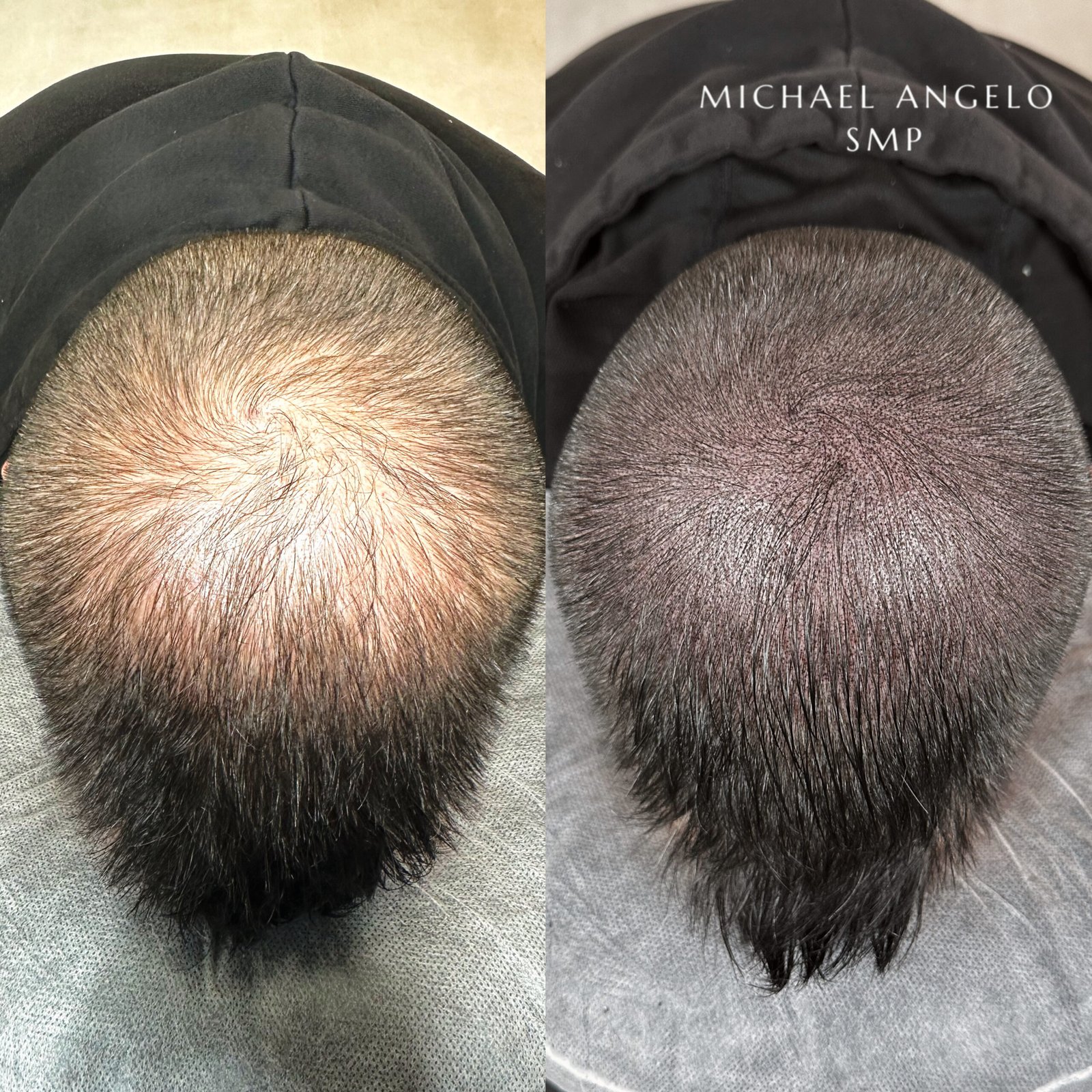
This real SMP before-and-after demonstrates how pigment impressions can reduce visible scalp while blending with transplanted and existing hair.
SMP Can Also Be Considered Before Surgery.
Someone who has not yet undergone hair transplant surgery can explore SMP as a cosmetic option before deciding how much surgical restoration they actually want.
Try the Density Look
SMP can reduce scalp contrast before surgery. Some clients may find that the cosmetic improvement changes how much additional restoration they want.
Visualize a Hairline
An experienced SMP artist can help visually design a natural-looking hairline based on the face, existing hair and preferred style.
Coordinate With Your Surgeon
An SMP hairline is not a surgical plan. A hair transplant surgeon must determine appropriate graft placement based on donor supply, future hair loss and surgical considerations.
Tell both your SMP artist and hair transplant surgeon what you are planning. Communication between both professionals helps ensure the SMP design and surgical plan are working toward the same overall appearance.
Most SMP Treatments Take 1–3 Sessions.
SMP is built gradually. The exact number of sessions depends on the treatment area, existing hair, skin response, scar tissue and how the pigment heals.
Foundation
The initial session establishes coverage, spacing, pigment tone and the overall treatment pattern.
Density & Blending
After healing, additional impressions can be placed where more density, blending or scar camouflage is needed.
Refinement
When necessary, another session can refine areas that healed lighter or need additional blending with surrounding hair.
Scar tissue can respond differently from normal scalp. Rather than oversaturating a scar in one appointment, a conservative layered approach allows the artist to evaluate how the pigment heals before deciding how much additional coverage is appropriate.
SMP After a Hair Transplant.
A recently transplanted scalp needs time to heal, and transplanted follicles need time to develop before the final density can be properly evaluated.
Hair restoration guidance commonly recommends allowing about one year after a transplant before adding SMP to the transplanted area. This gives the transplant time to mature before SMP is designed around the final growth pattern.
If your transplant was recent, speak with your hair transplant surgeon before having SMP performed over or near the surgical area.
SMP itself heals much faster than a hair transplant, but pigment should not be placed over a recently transplanted scalp simply because SMP has a shorter healing period.
Waiting allows the final transplant growth to become visible so the SMP artist can identify where real density exists, where scalp remains visible and where additional visual coverage would actually help.
SMP & Hair Transplant FAQ.
Can I get SMP after a hair transplant?
Yes. SMP can be used after a hair transplant in appropriate candidates once the transplant and scalp have adequately healed. It can improve the appearance of density or camouflage donor-area scarring.
How long should I wait after a hair transplant before SMP?
Hair restoration guidance commonly recommends waiting about one year before SMP is performed over a transplanted area so the transplant growth and scalp can mature. Discuss your individual timing with your transplant surgeon.
Can SMP make my hair transplant look denser?
Yes, visually. SMP reduces contrast between visible scalp and existing hair. It does not create new follicles or cause transplanted hair to grow.
How many SMP sessions will I need?
Most Michael Angelo SMP treatments require approximately 1–3 sessions. The exact number depends on coverage, existing hair, skin response, scar tissue and how the pigment heals.
Can SMP camouflage FUE scars?
SMP can reduce the visual contrast of the small extraction marks associated with FUE by blending them with the surrounding scalp and hair.
Can SMP camouflage an FUT scar?
A mature FUT linear scar can often be visually blended using SMP. Pigment impressions help break up the appearance of the line and blend it with the surrounding area.
Is scar SMP more difficult than regular SMP?
Scar tissue can accept and retain pigment differently from untreated scalp and can become red quickly during treatment. Conservative pigment selection, depth, spacing and layering are particularly important.
Can I get another hair transplant after SMP?
SMP does not add or remove donor follicles. Future transplant surgery is a medical and surgical decision, so tell your surgeon about previous SMP when planning another procedure.
Should I get SMP before a hair transplant?
SMP can be considered before surgery for someone who wants cosmetic density or wants to visualize a preferred hairline appearance. If both treatments are planned, communicate with both your SMP artist and transplant surgeon.
Does SMP remove hair transplant scars?
No. SMP does not remove scar tissue. It camouflages the scar by reducing visual contrast between the scar and surrounding scalp.
Not Sure How SMP Fits Your Hair Transplant?
Schedule a free consultation with Michael Angelo SMP. We can evaluate your existing density, transplant result, donor area and scars from an SMP perspective and explain what can realistically be improved with scalp micropigmentation.