
Hair Micropigmentation For Thinning Hair & Existing Hair.
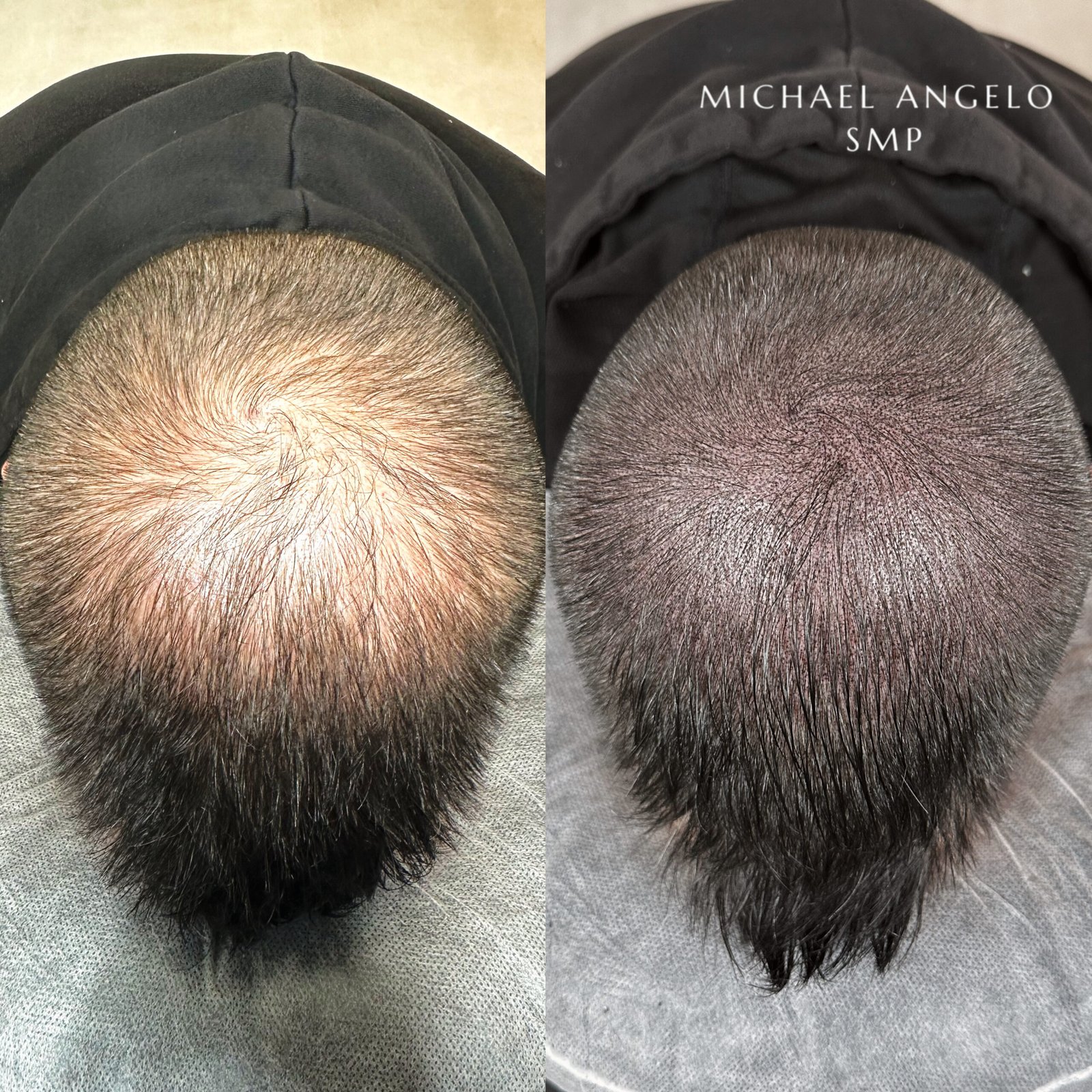
Hair micropigmentation is scalp micropigmentation performed between existing hairs to reduce visible scalp and create the appearance of greater hair density.
Unlike shaved-head SMP, density SMP is designed around the hair you already have. Color, impression size, spacing, texture and treatment density are adjusted to visually complement your existing follicles.
What Is Hair Micropigmentation?
Hair micropigmentation is a specialized application of scalp micropigmentation (SMP) performed within existing hair. Pigment impressions are strategically placed throughout areas of thinning to reduce the contrast between visible scalp and surrounding hair.
This can make thinning areas appear visually fuller without creating new hair or physically thickening existing follicles.
Hair micropigmentation is also commonly described as density SMP.
Jump directly to the information you are looking for.
Visual Density. Not New Hair Growth.
Hair micropigmentation changes how much scalp is visually noticeable between existing hairs. It does not create new follicles, physically thicken existing hair or stop hair loss.
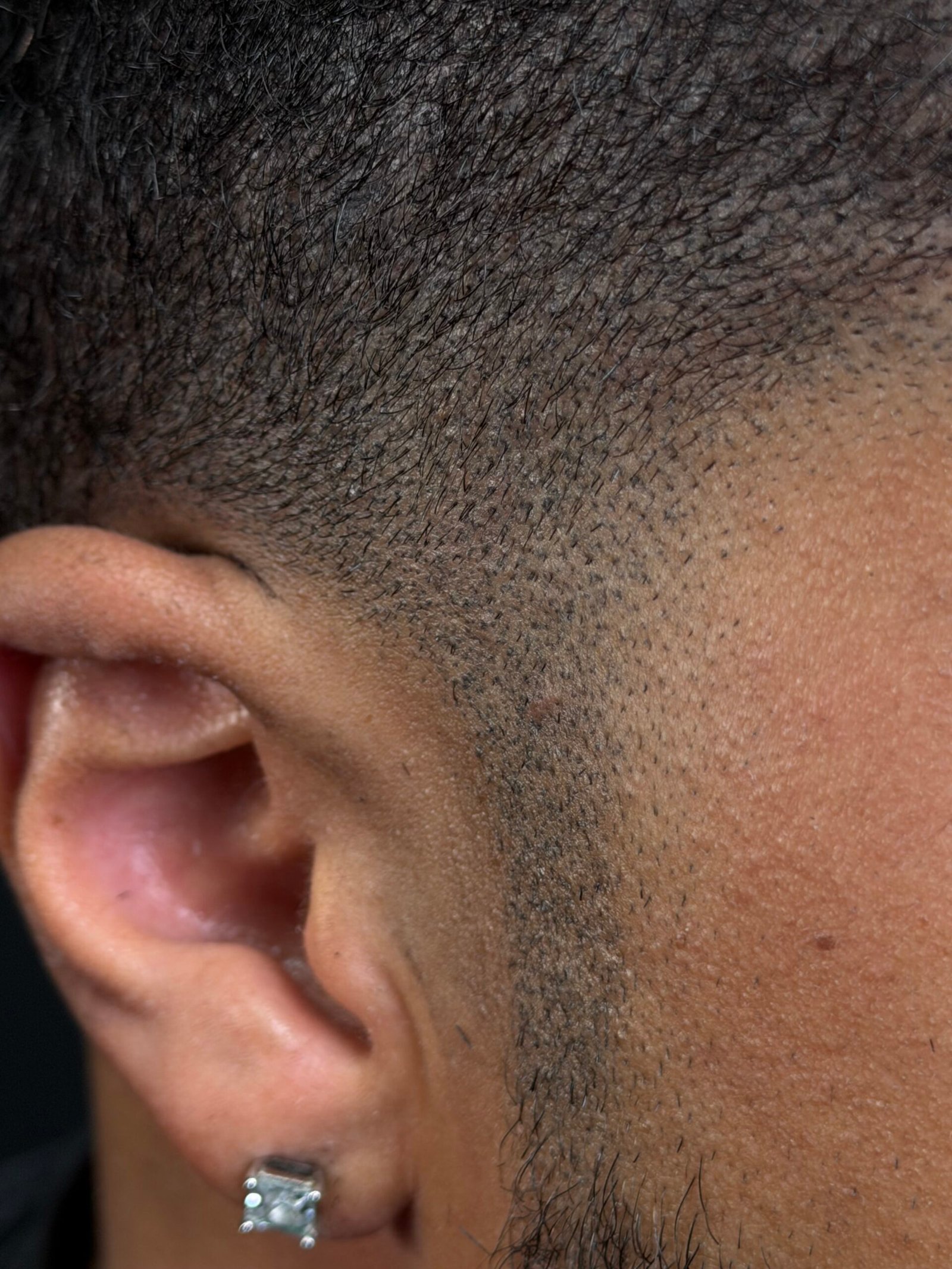
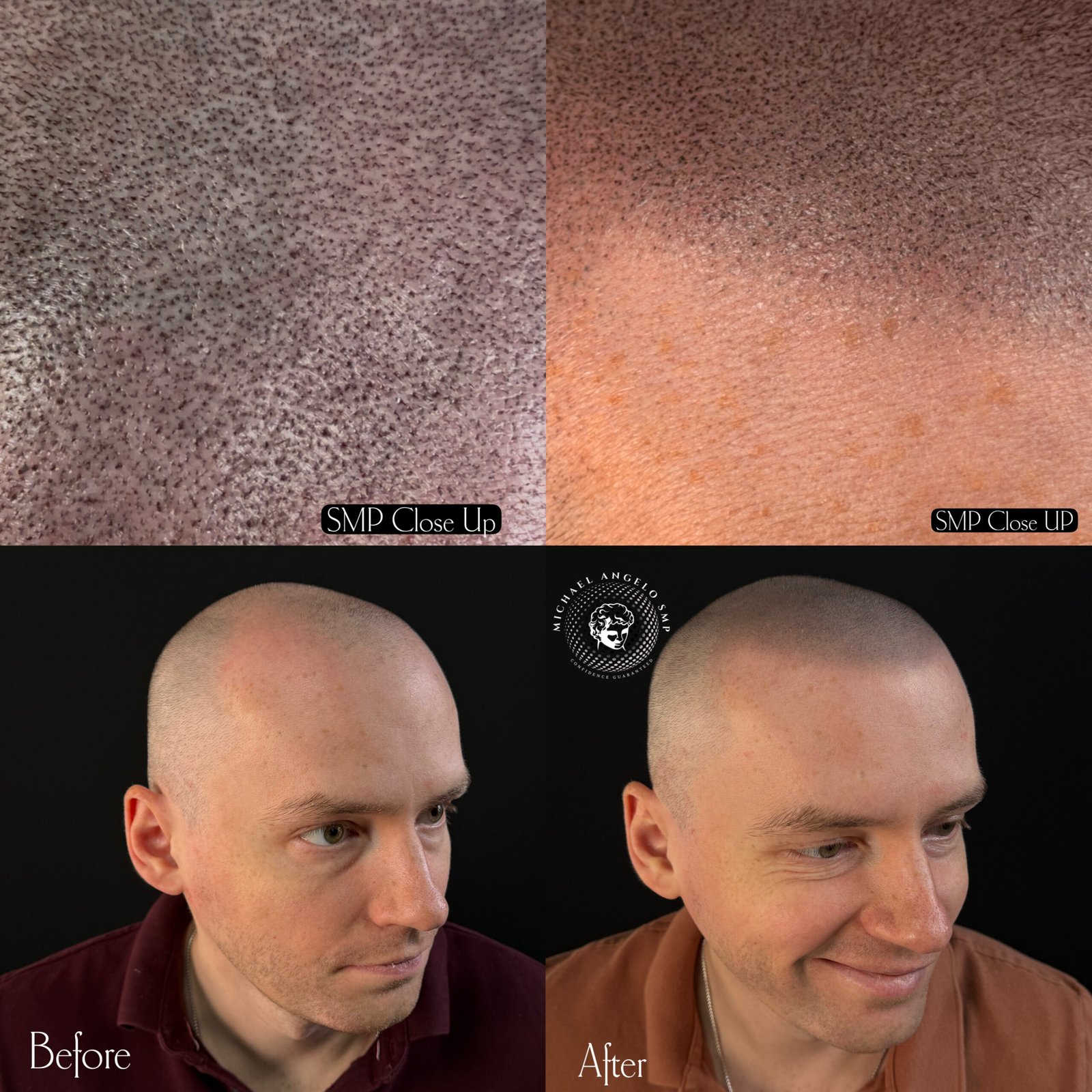 DENSITY SMP • CLOSE-UP
Reducing The Contrast Between Hair And Scalp.
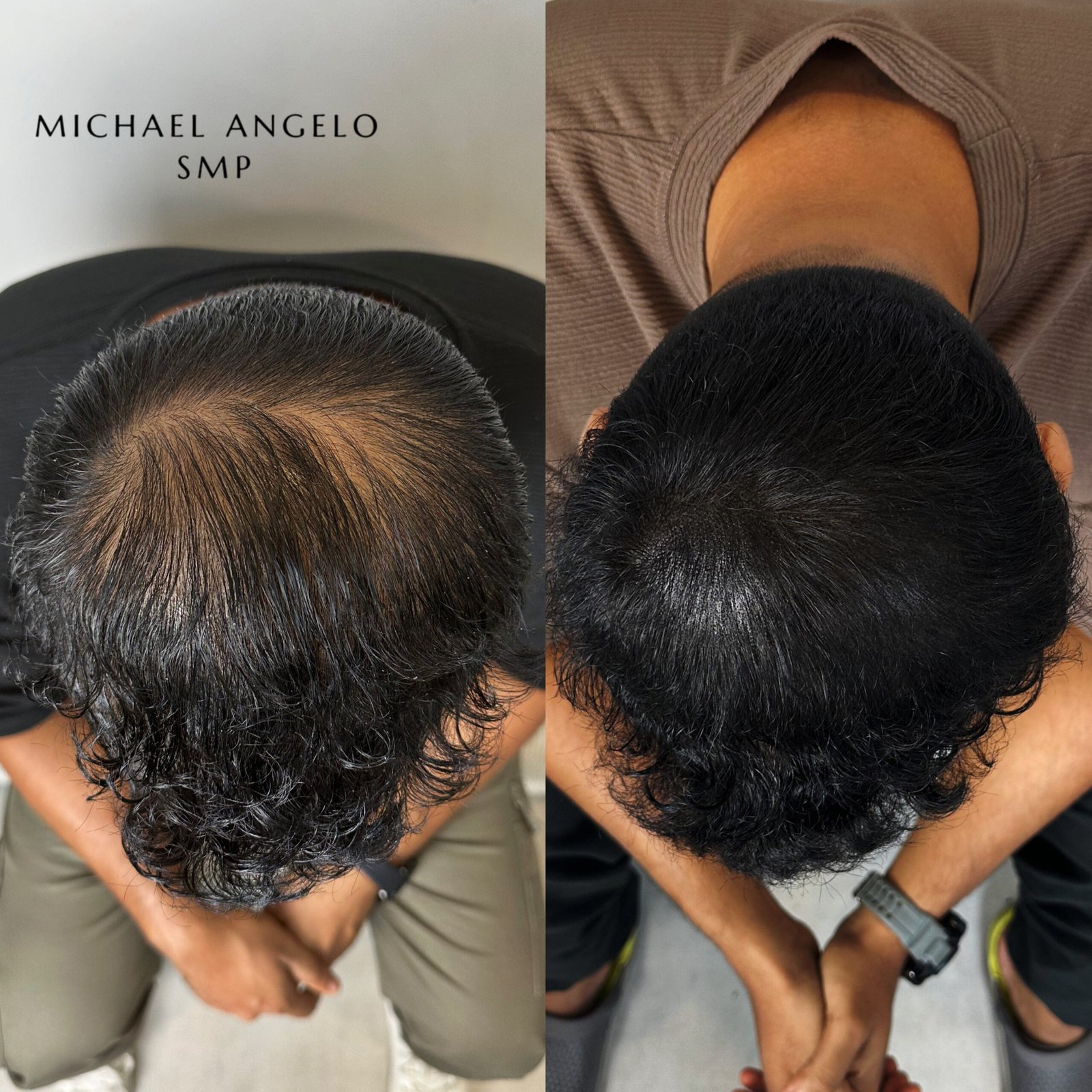
Imagine a thinning crown where individual hairs remain but lighter scalp is visible between them. That contrast can make the thinning appear more pronounced.
By introducing carefully controlled pigment impressions between those hairs, SMP can visually reduce that contrast and make the area appear denser.
Density SMP vs. Shaved-Head SMP.
Both treatments use scalp micropigmentation, but they are not designed to accomplish the same visual objective.
HAIR MICROPIGMENTATION
WORKS WITH EXISTING HAIRDensity SMP is placed between existing hairs to reduce visible scalp and visually complement the hair that remains.
SHAVED-HEAD SMP
RECREATES SHAVED FOLLICLESShaved-head SMP must visually stand on its own and recreate the appearance of closely shaved follicles across areas where hair may be absent.
EXPLORE SHAVED-HEAD SMP →Natural Density Requires More Than Adding Pigment.
Natural-looking hair micropigmentation depends on how the SMP interacts with the client’s existing hair, skin and pattern of thinning.
HAIR COLOR
Pigment should visually complement the surrounding hair and healed scalp.
EXISTING DENSITY
The amount of remaining hair influences how concentrated the treatment should be.
HAIR TEXTURE
Fine, coarse and differently textured hair can require different visual approaches.
IMPRESSION SIZE
The size of healed impressions affects how naturally they blend with surrounding follicles.
SPACING
Spacing should reflect the surrounding follicle pattern rather than creating a solid field.
TREATMENT DENSITY
More pigment is not automatically better. Density must remain visually balanced.
SKIN
Different skin characteristics can affect placement, healing and retention.
PRESSURE + PLACEMENT
Controlled placement helps create consistent healed impressions.
BLENDING
Treated and untreated areas should transition naturally into one another.
FUTURE HAIR LOSS
The treatment should consider what could happen if surrounding hair becomes thinner later.
Pigment Mixology Matters.
Existing hair can range from blonde and light brown to dark brown, red, gray and black. There is no single pigment formula that should automatically be used for everyone.
The goal is not necessarily to copy the literal color of an individual hair strand. Hair sits above the skin while SMP pigment heals within the skin, meaning light interacts with each differently.
The objective is a visual relationship between the healed SMP, scalp, surrounding follicles and existing hair.
Spacing Should Match The Hair Around It.
Consider a crown where natural follicles are spaced relatively far apart. Extremely concentrated SMP in the middle could create an obvious visual mismatch.
On the other hand, treatment that is too sparse may not create enough visual density.
Impression size, spacing, distribution, pigment concentration and transitions are adjusted according to the surrounding hair.
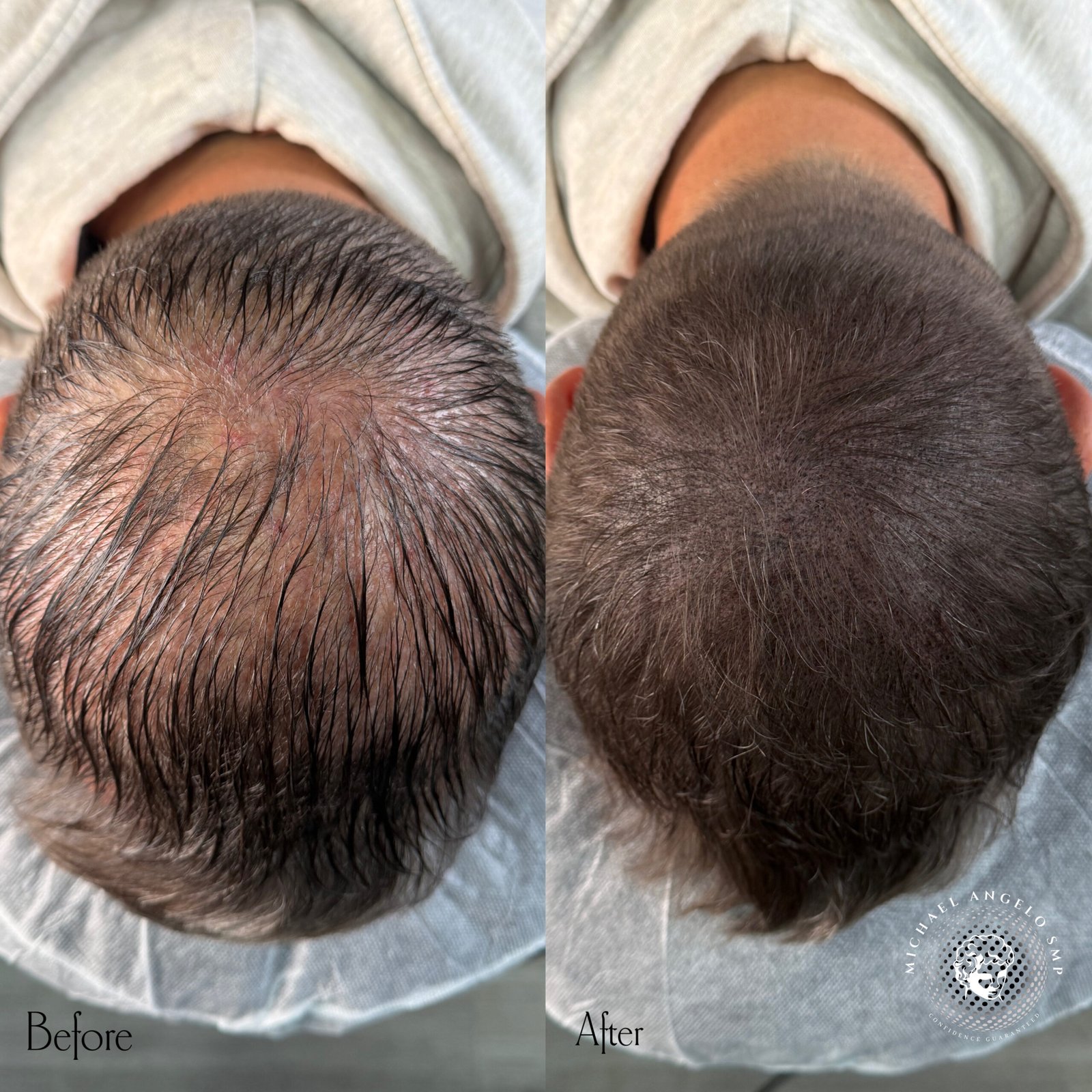
Hair Micropigmentation For Crown Thinning.
You do not need to be completely bald to receive SMP. Density treatment can be used where existing hair remains but visible scalp makes the area appear thin.
Common treatment areas can include the crown, mid-scalp, frontal scalp, hairline, diffuse thinning and areas surrounding transplanted hair.
Having existing hair does not automatically make someone a good candidate. The amount of remaining coverage and the likelihood of future hair loss are important parts of treatment planning.
SMP Can Complement Existing Transplanted Hair.
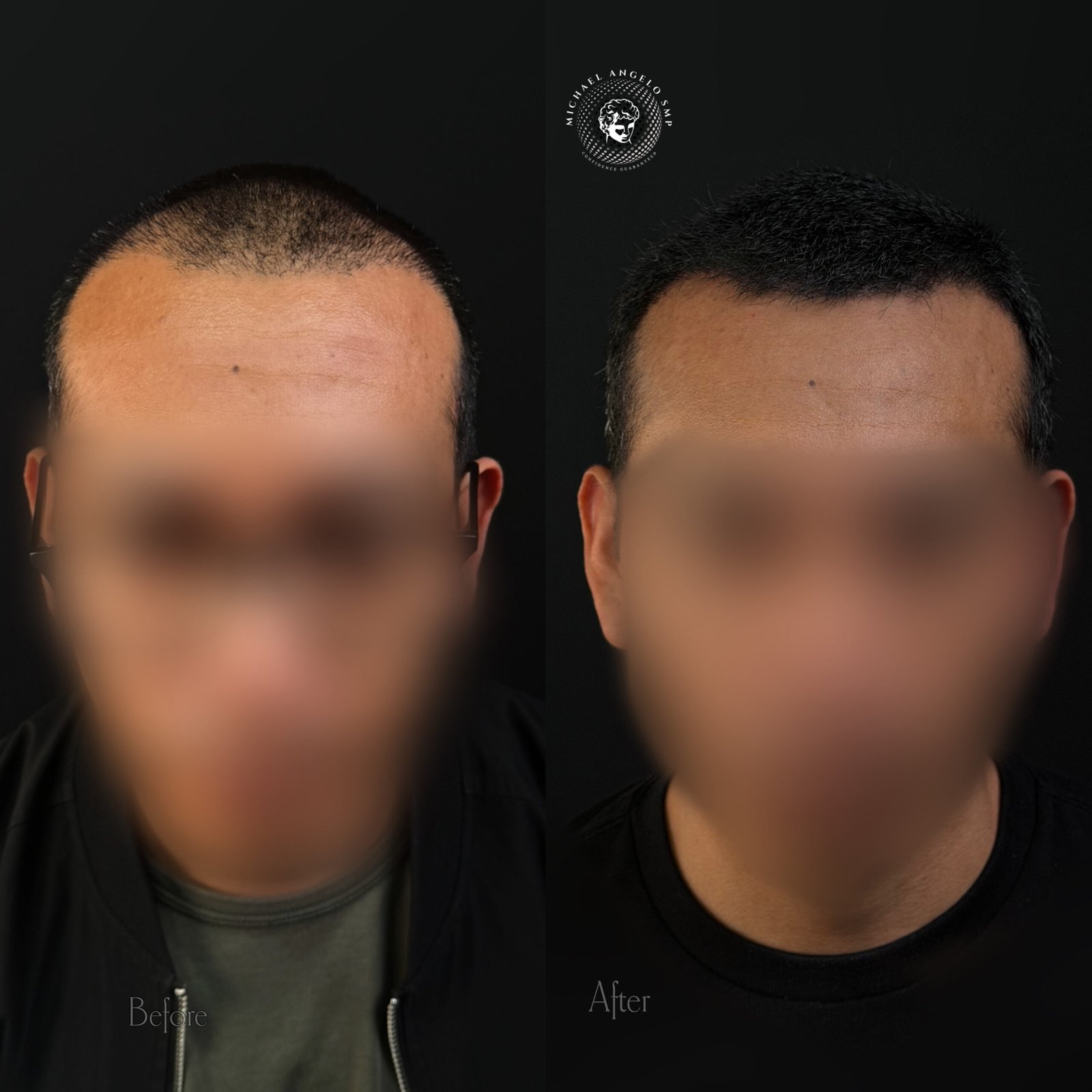
Some hair transplant clients still have visible scalp between transplanted follicles. In appropriate candidates, hair micropigmentation can be placed between transplanted and existing hair to reduce that contrast.
SMP does not increase the number of transplanted follicles. It creates visual density around the hair that is already present.
Hair transplant scar camouflage is a separate treatment objective and may require a different approach from density SMP.
READ THE COMPLETE SMP GUIDE →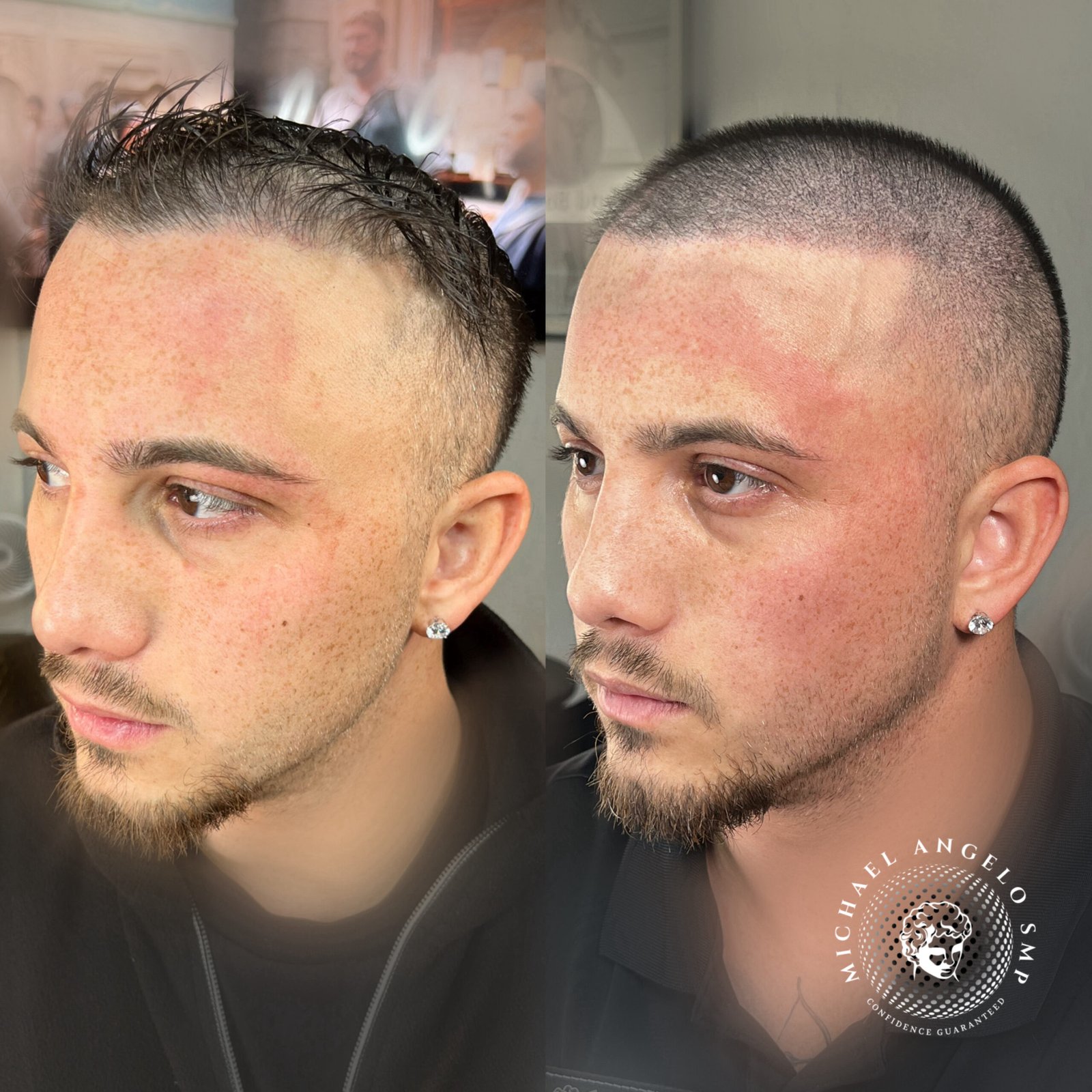
Designed For Clients Who May Shave Or Grow Their Hair.
Hybrid density combines elements of shaved-head SMP and hair density SMP.
Shaved-head SMP generally requires spacing and texture capable of resembling independent shaved follicles. Hair density SMP can use tighter spacing where impressions are visually supported by existing hair.
A hybrid approach adjusts those characteristics to find a balance between both objectives.
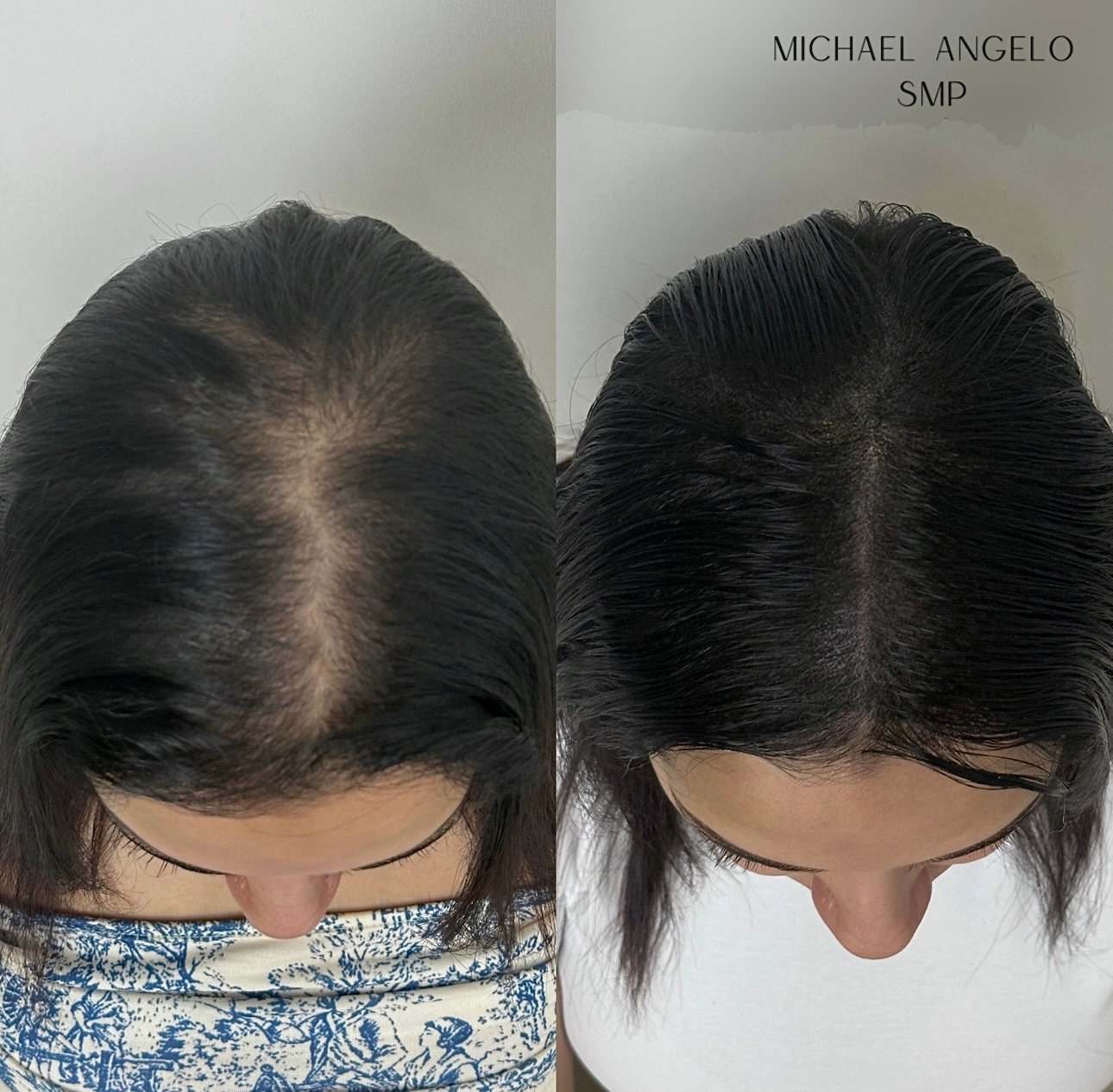
Density SMP Is Not Limited To Men.
Hair micropigmentation can also be considered for women experiencing visible scalp through areas of existing hair.
Candidacy depends on the individual’s hair coverage, pattern of thinning, scalp characteristics and how the treatment is expected to look if the surrounding hair changes in the future.
What Happens If You Lose More Hair Later?
This is one of the most important considerations when designing density SMP.
Density SMP is designed around the hair that exists at the time of treatment.
If surrounding hair later disappears, pigment that was originally intended to sit beneath longer existing hair may become more exposed.
That exposed density treatment may not necessarily look like independent shaved follicles because that was not its original purpose.
This is why progressive hair loss should be considered before deciding between traditional density SMP, hybrid density or a shaved-head approach.
When Density SMP May Not Be Recommended.
Someone experiencing rapid or significant progressive hair loss may not have enough stable surrounding hair for a traditional density treatment to remain visually appropriate long term.
In some situations, a shaved-head treatment or hybrid approach may make more sense.
The Goal Is The Right Treatment.
At Michael Angelo SMP, we have turned down density treatments when we believe the client’s current or future hair-loss pattern could compromise the result.
The responsibility of an SMP artist is not simply to perform SMP. It is to determine whether the requested treatment makes sense for the individual client.
Minoxidil, Finasteride & Hair Micropigmentation.
Products applied directly to the scalp may need to be temporarily avoided while freshly treated skin heals, depending on your aftercare protocol.
Oral medications do not contact freshly treated scalp in the same way as topical products.
Do not stop or change a prescribed medication based on this article. Follow the instructions of the medical professional who prescribed it.
Density Is Built Progressively.
Hair micropigmentation may require approximately one to three sessions, with three sessions being common for many treatments. The exact number depends on the individual treatment and healing response.
FOUNDATION
Establish the initial treatment pattern and visual direction.
HEALING
Allow the impressions to settle so retention and color can be evaluated.
LAYERING
Add density strategically rather than trying to create maximum darkness immediately.
REFINEMENT
Adjust blending, density and areas requiring additional work.
Healing Is Part Of The Treatment.
The first approximately two weeks after treatment are an important healing period.
Freshly treated skin should be protected according to the individualized aftercare protocol provided by your artist. Certain topical products, including topical hair-loss treatments, may need to be temporarily avoided.
Depending on the protocol, a small amount of a recommended aftercare product such as Aquaphor may be used.
Hair Micropigmentation Is Long-Lasting, Not Visually Permanent.
A general range before a more substantial refresh may be desired, although individual results vary.
Repeated and prolonged UV exposure can contribute to faster fading. Normal outdoor life is expected, but sun exposure can influence longevity.
Touch-up timing depends on healed appearance, skin, lifestyle, UV exposure and personal preference. A complete annual recreation is not automatically necessary.
Explore Our Density SMP Gallery.
Explore hair micropigmentation, crown density, transplant enhancement, healed density, female density and hybrid SMP treatments completed by Michael Angelo SMP.
Hair Micropigmentation
Density treatment designed around existing hair, scalp visibility, texture and individual hair-loss pattern.
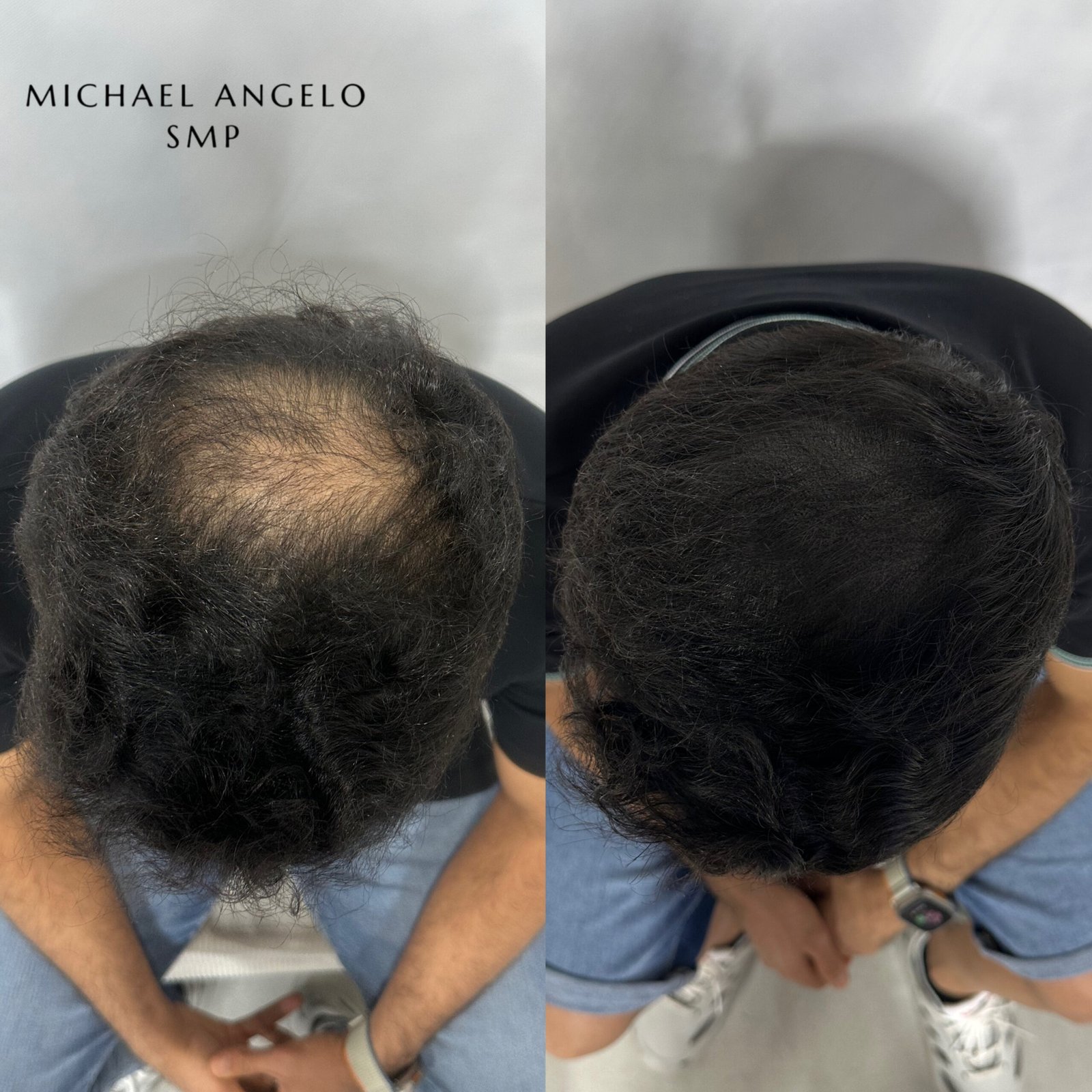
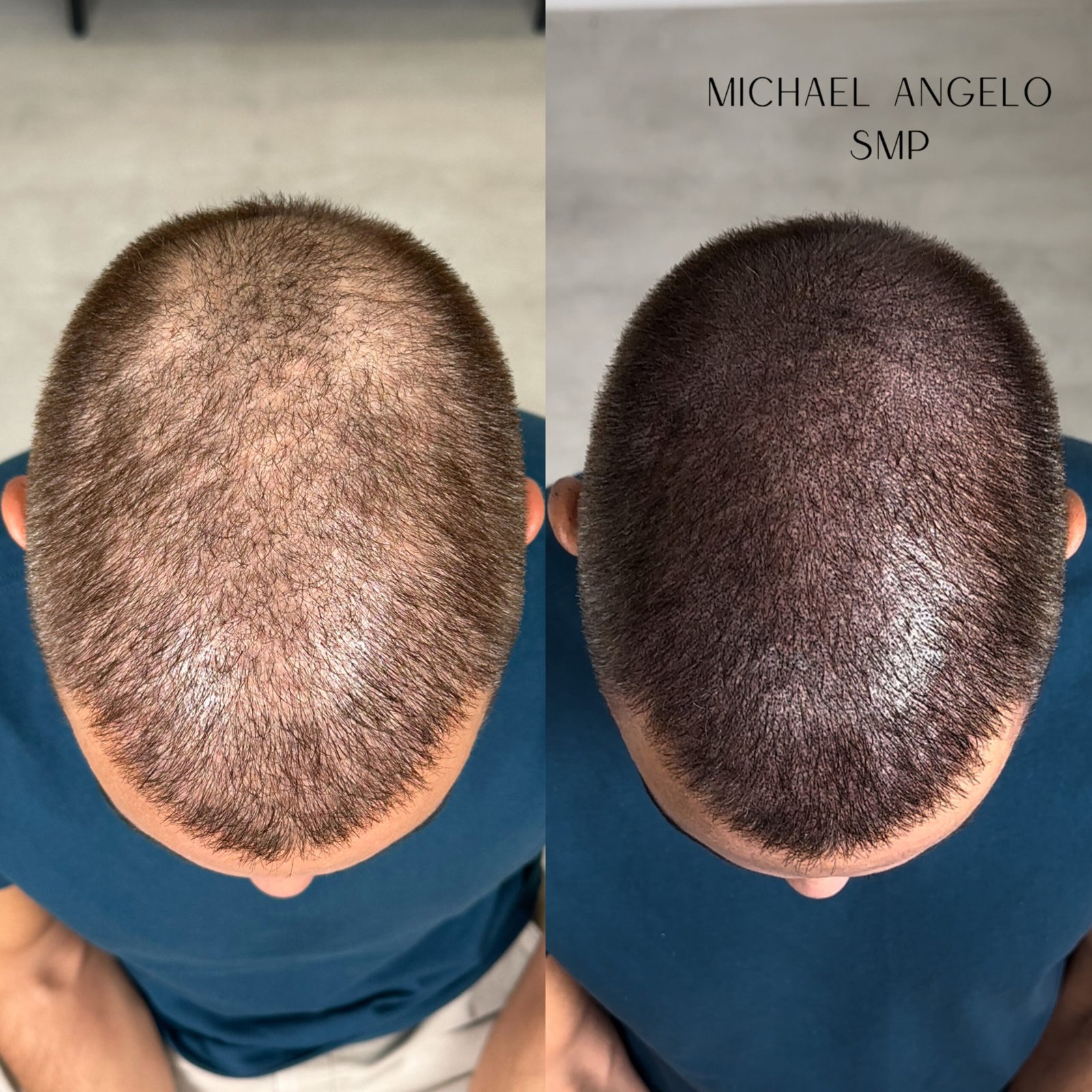
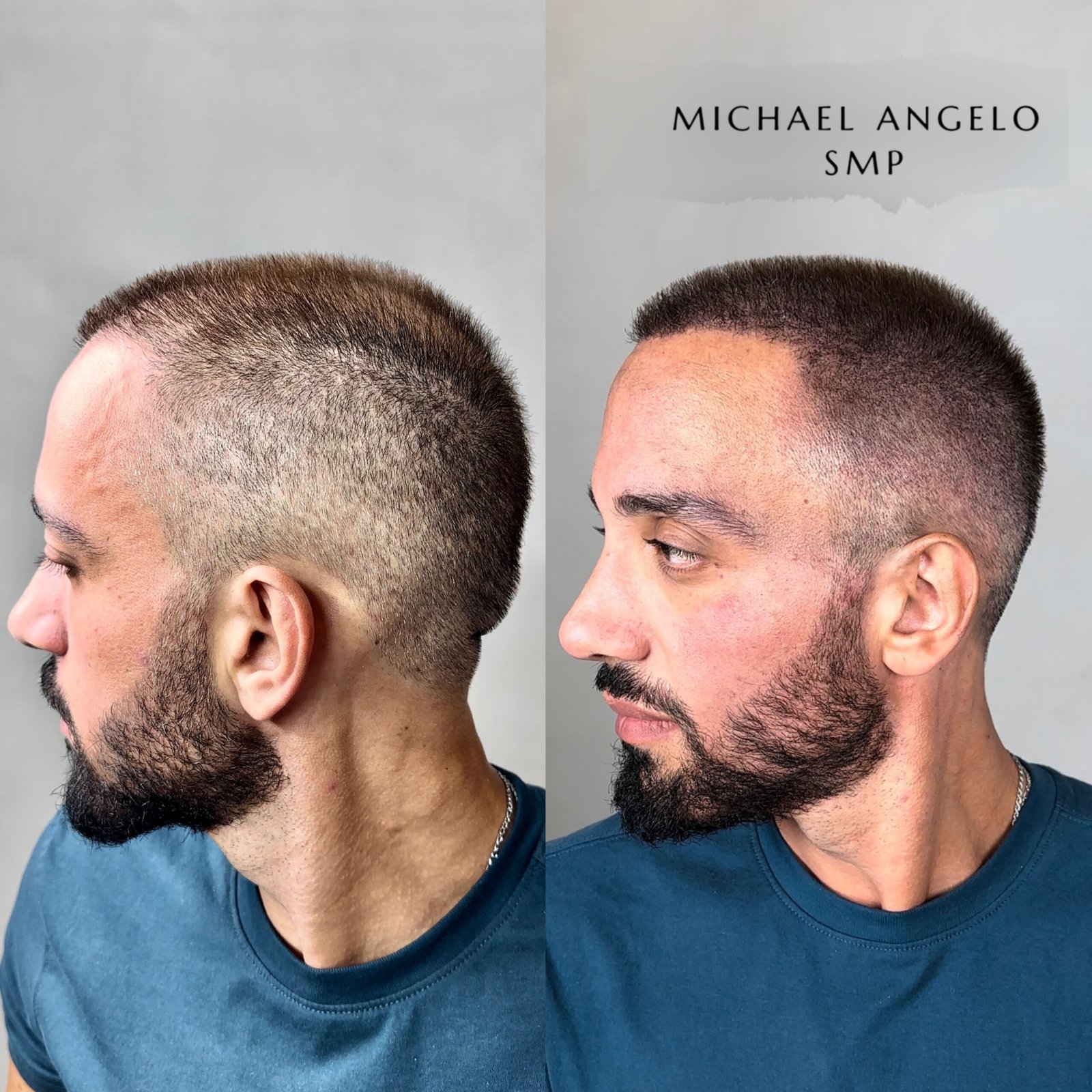
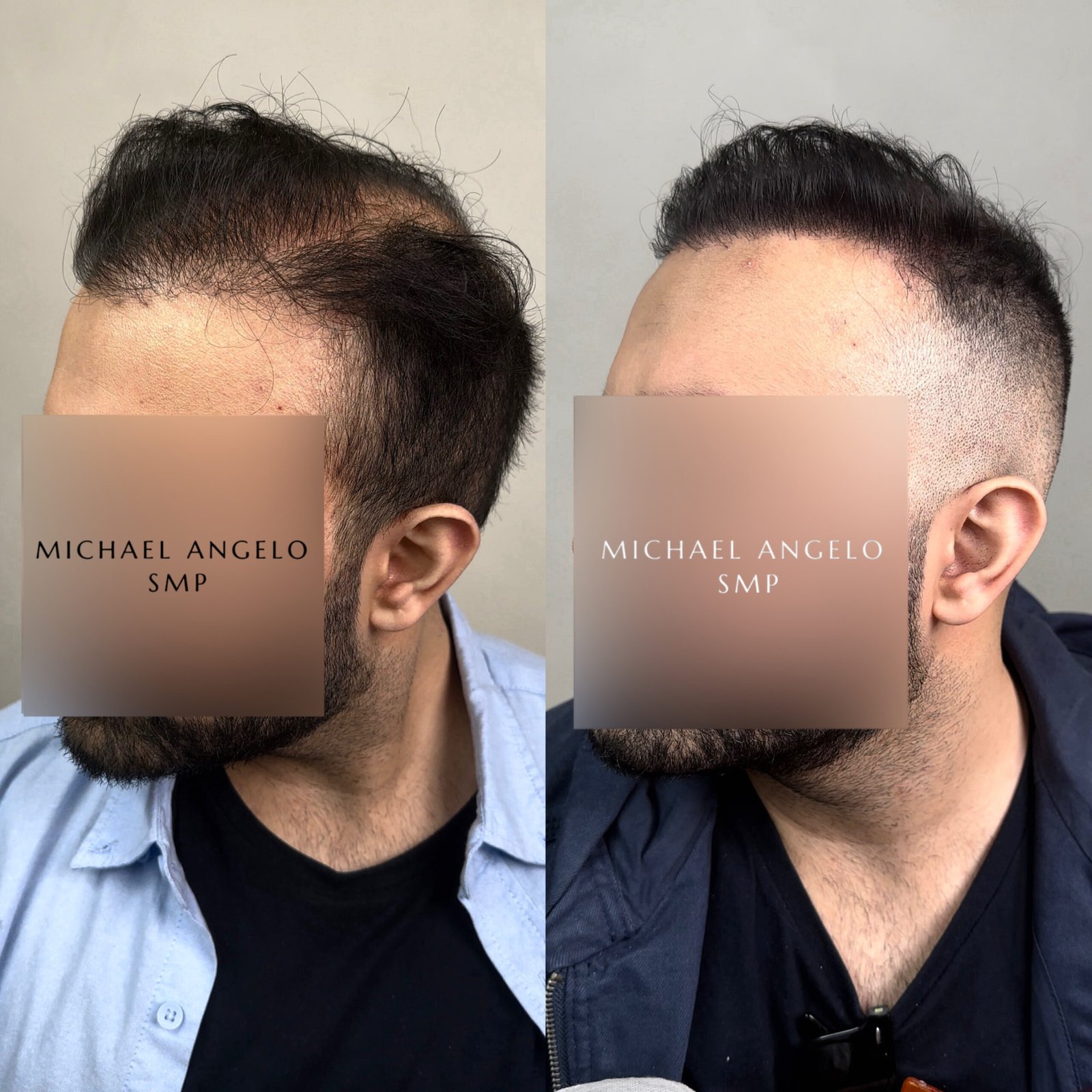
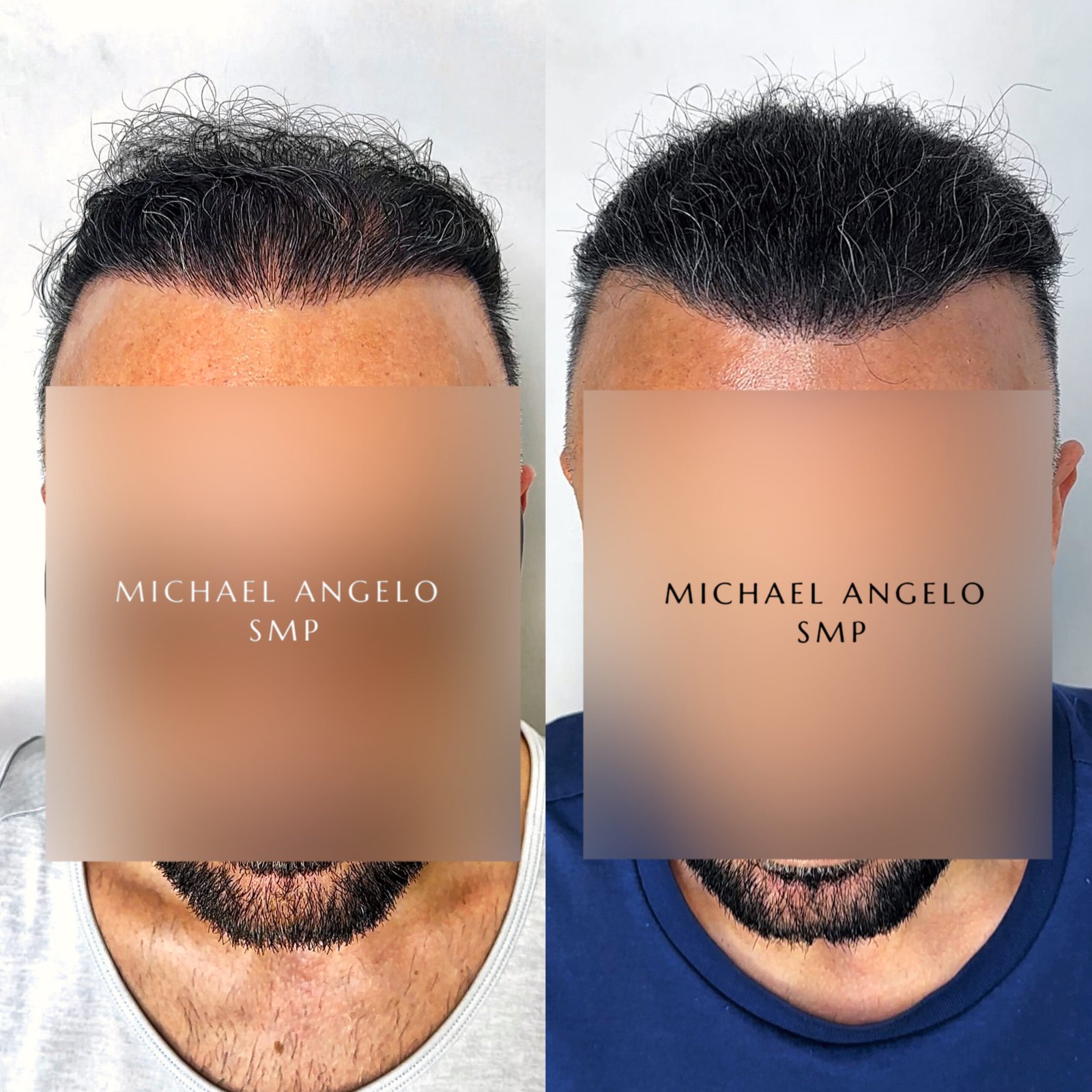
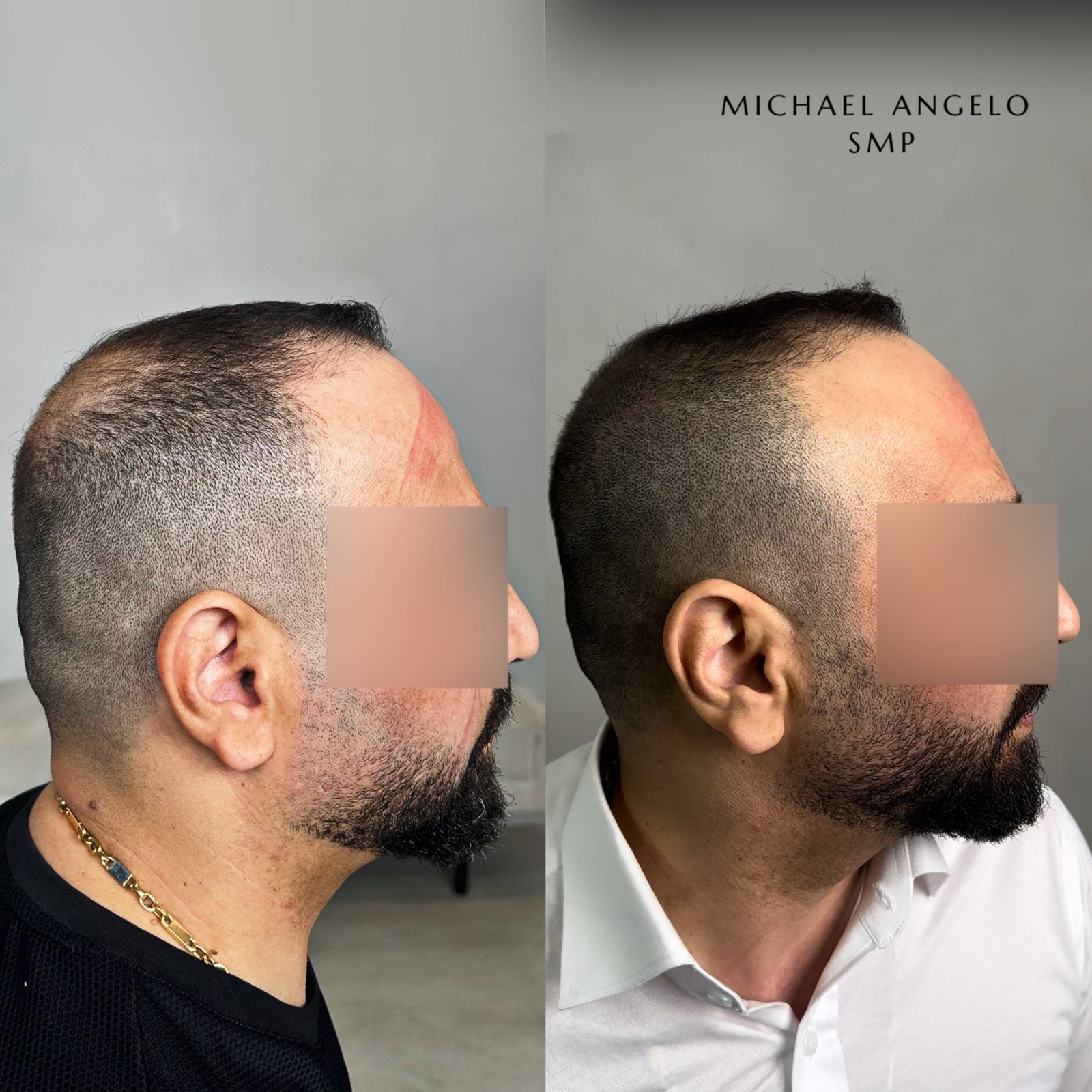
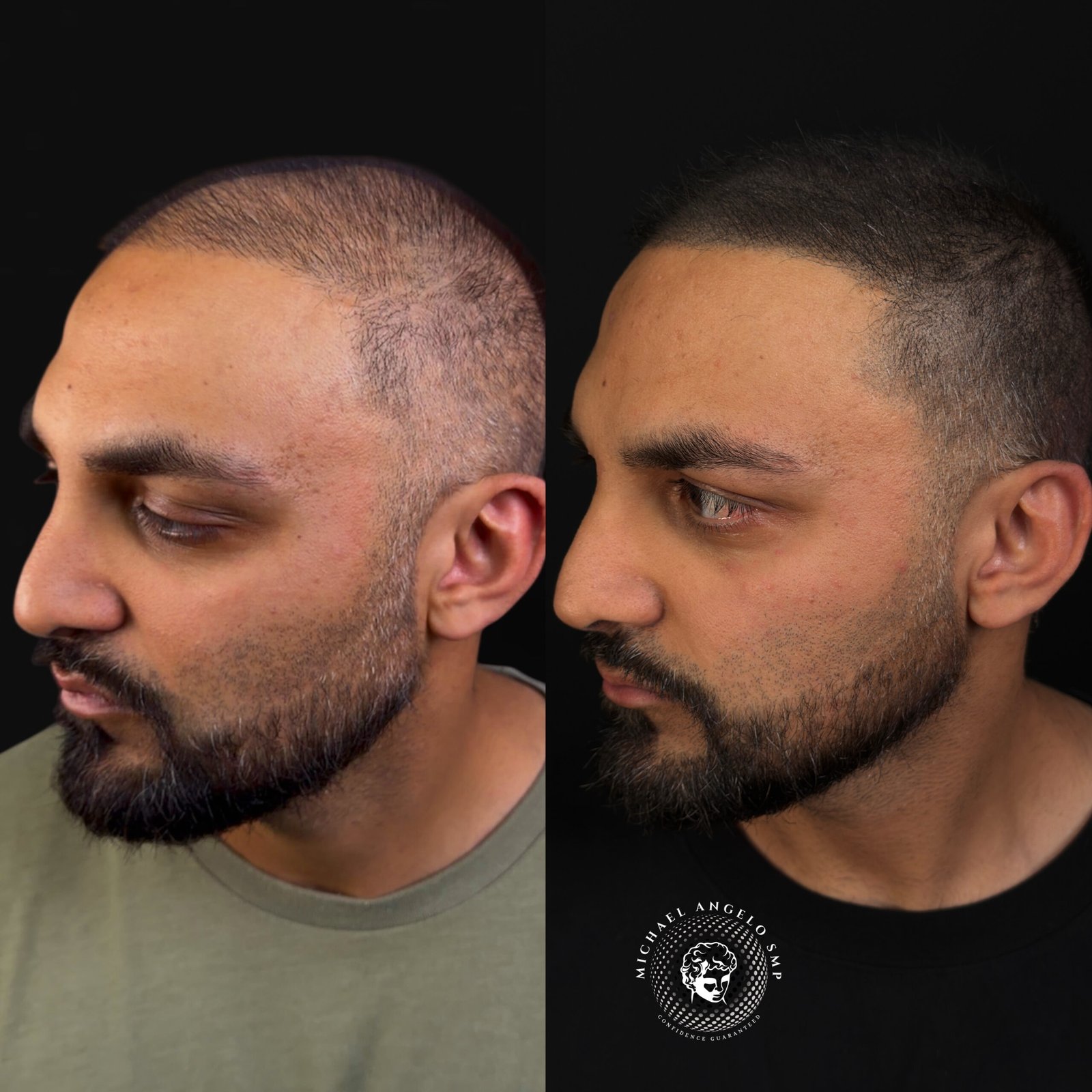
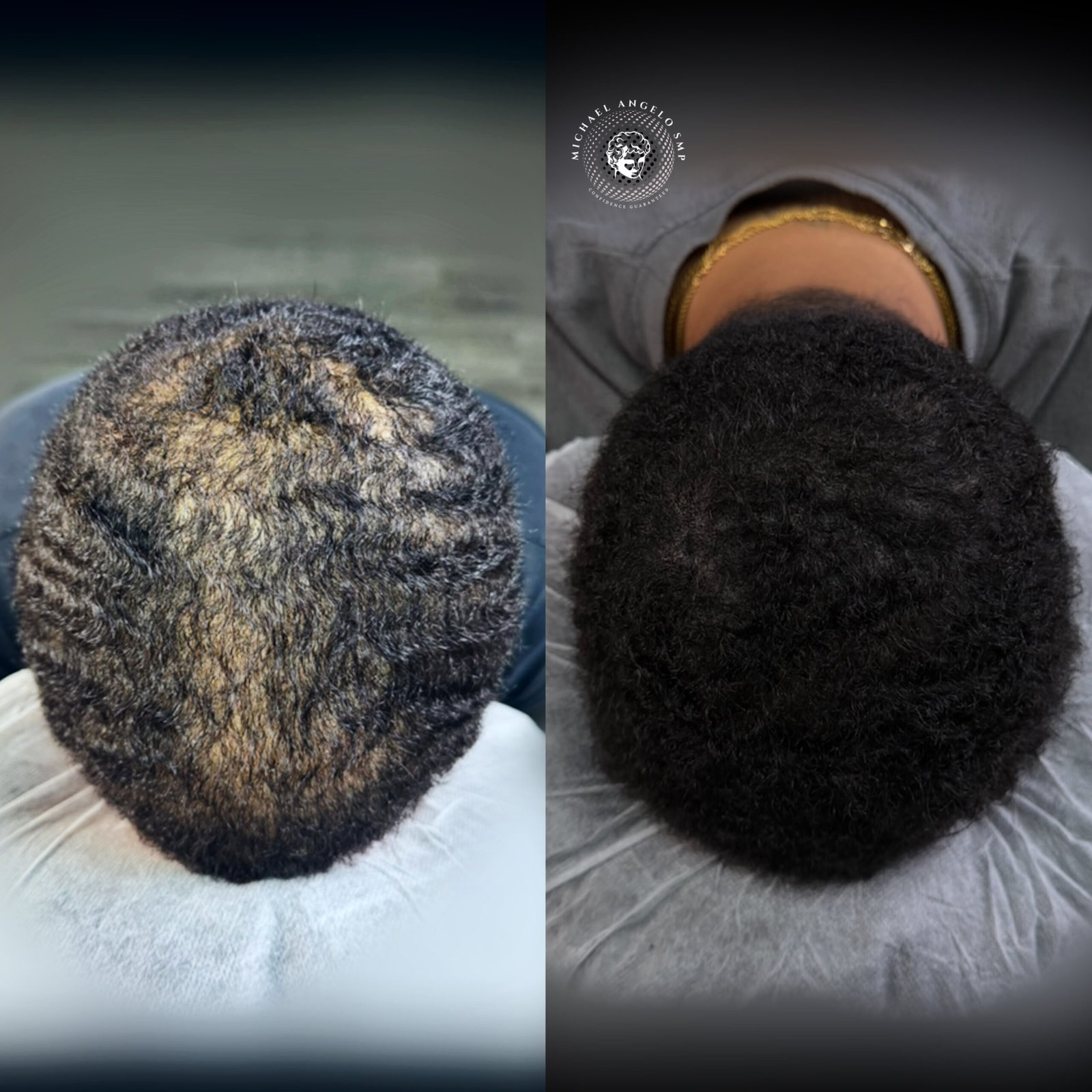
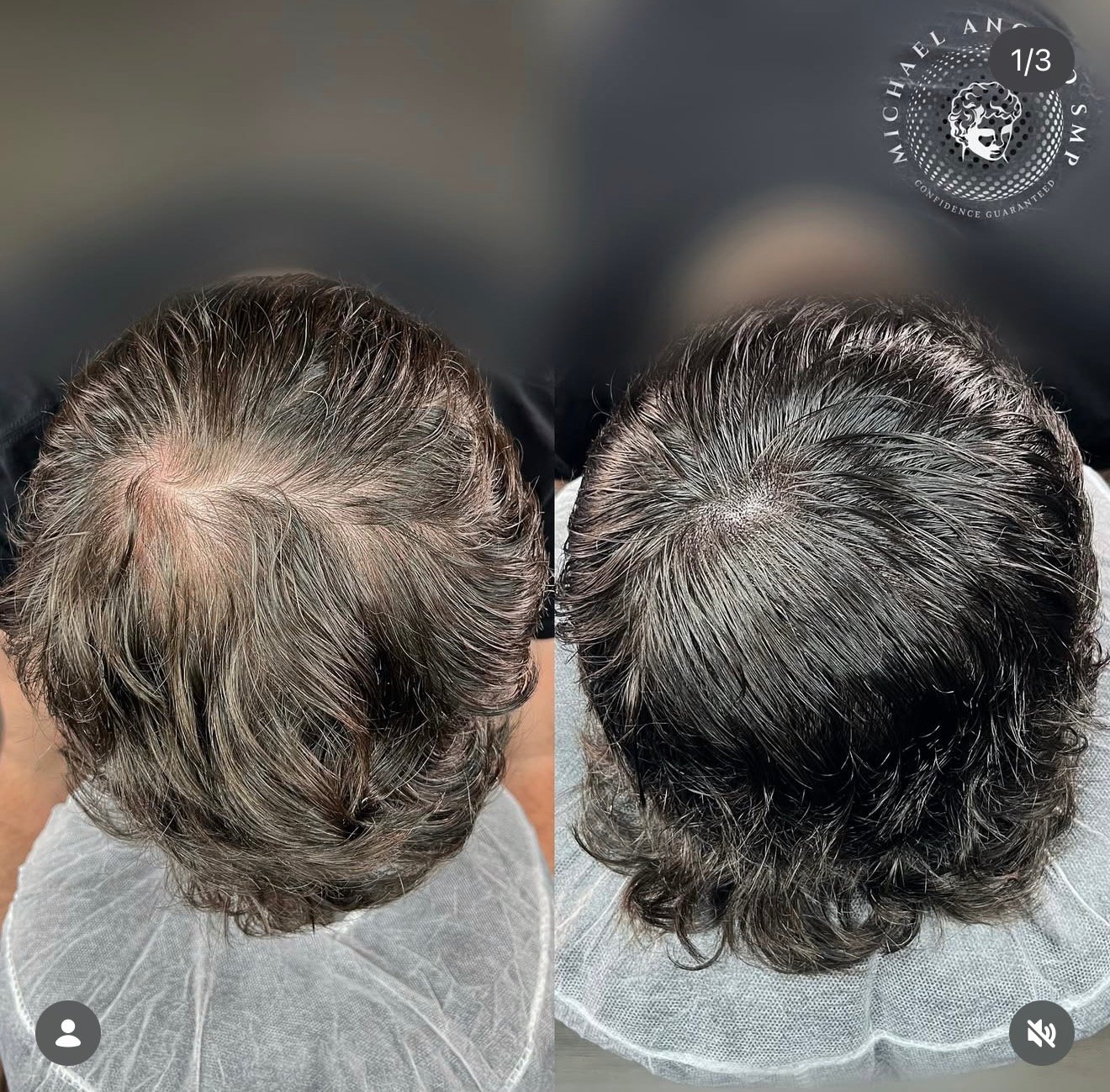
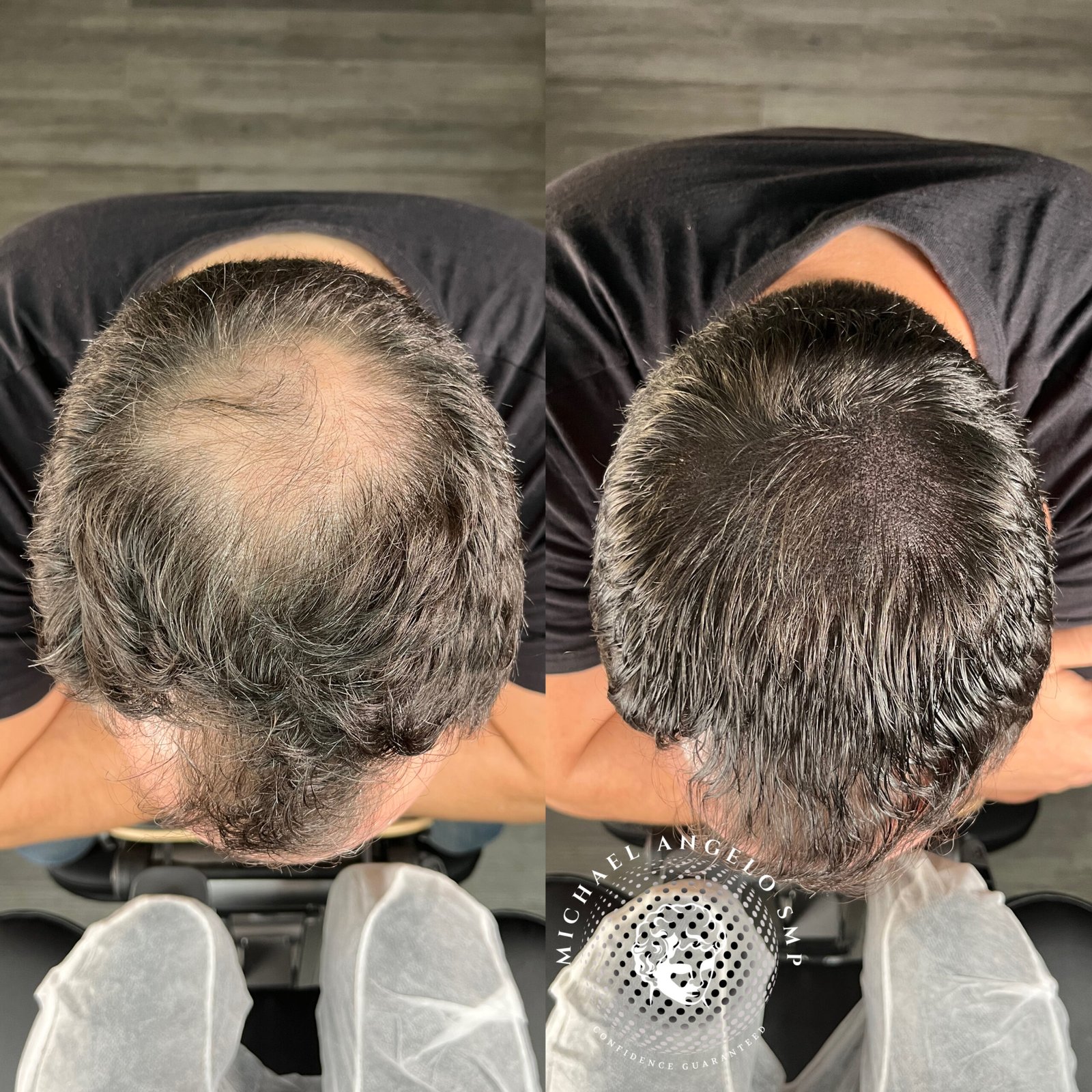
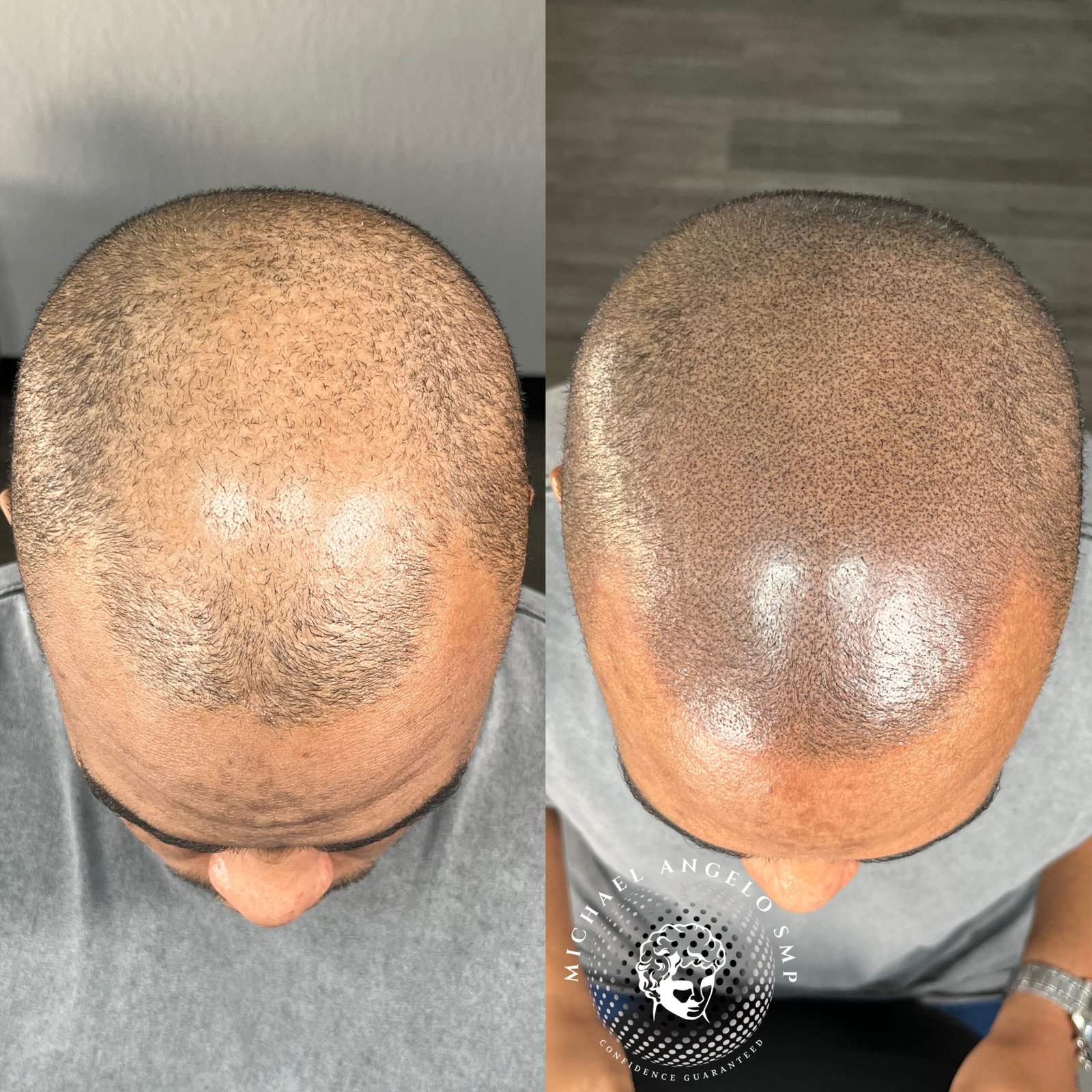
Individual results, retention and healing can vary from client to client.
BACK TO TOP ↑Knowing SMP Theory Is Different From Applying It To Real Hair.
A density SMP portfolio should demonstrate work across different patterns of thinning and different treatment objectives.
Individual Treatment. Not A Cookie-Cutter Technique.
Before recommending hair micropigmentation, we evaluate your existing hair, scalp visibility, thinning pattern, hair-loss history, future plans and how additional hair loss could affect the treatment.
Depending on those factors, we may recommend traditional density SMP, hybrid density, shaved-head SMP or no SMP at all.
The objective is not simply to put pigment into every visible area of scalp. The objective is to design a treatment that makes sense for the individual client.
MEET YOUR SMP ARTIST →Before You Get Started.
Can scalp micropigmentation be done if I still have hair? +
Does hair micropigmentation grow hair? +
Does SMP make thinning hair look thicker? +
Is hair micropigmentation the same as scalp micropigmentation? +
Is density SMP different from shaved-head SMP? +
Can SMP be used after a hair transplant? +
Can hair micropigmentation be used on the crown? +
What happens if I lose more hair after density SMP? +
Can I use minoxidil after scalp micropigmentation? +
How many sessions does hair micropigmentation take? +
How long does hair micropigmentation take to heal? +
How long does hair micropigmentation last? +
Does hair micropigmentation fade? +
How do I know if hair micropigmentation is right for me? +
Find Out Which Type Of SMP Makes Sense For You.
Color matters. Texture matters. Density matters. Skin matters. Pigment placement matters. Future hair loss matters. And experience matters.
At Michael Angelo SMP, the goal is to design a treatment that complements your existing hair and long-term goals rather than simply adding pigment everywhere scalp is visible.